
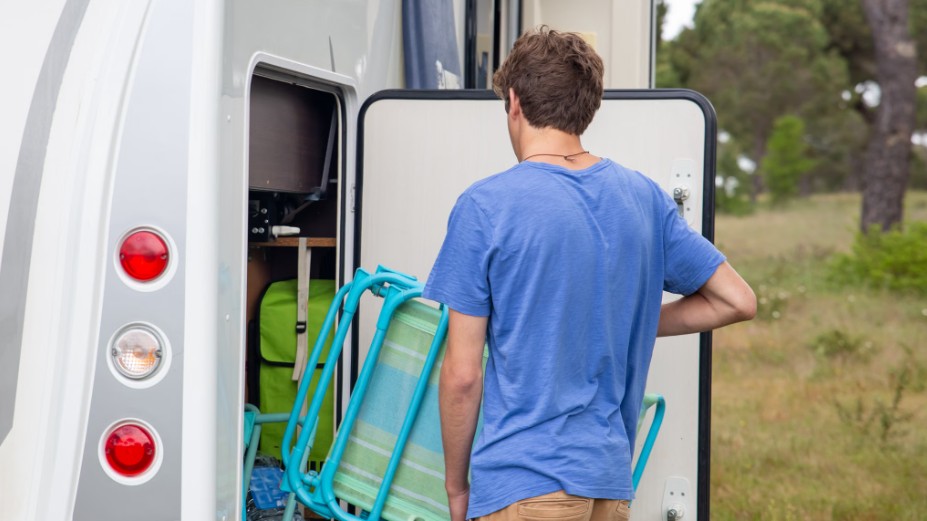
Storage solutions for travelers in Calgary touches on critical issues like financial losses, travel safety, and investment protection. The goal is not just finding a storage facility, but being strategic as an RV tourist or owner in optimizing your storage approach, for an elevated outdoor experience. It’s about balancing access, protection tiers, and defensive maintenance to safeguard your investment.
Table of Contents
1. Start With the Item, Not the Storage Unit
An RV and a box of camping gear should not automatically be treated as the same storage problem.The RV or travel trailer needs space to maneuver, hitch, collect and return without turning every pickup into a project. A boat needs enough room for its size and towing arrangement.
Smaller belongings—camping equipment, tools, spare parts, fishing gear or outdoor furniture—may be easier to manage in an indoor Self Storage Near Calgary.This simple distinction prevents a common mistake: choosing a storage option first and then trying to make all your belongings fit around it.For frequent mountain travelers, the better question is, “What am I storing, and what does that item need between trips?” Size, frequency of use, weather exposure and ease of access all influence the answer.
2. Let Your Travel Route Influence the Location
The proximity factor is a game changer to how you manage the entire journey. For example, if your RV regularly heads toward Kananaskis Country or Bragg Creek, you do not need a storage location that forces you through Calgary’s traffic.
A storage base along HWY 22 in Diamond Valley, at the base of the Rockies, can fit more naturally into that travel pattern. The same thinking applies to different equipment. If the boat is mainly used for trips toward Chain Lakes Provincial Park, its storage location should make those outings practical.
If an RV is repeatedly used for mountain camping, retrieving it should feel like the first step of the trip—not an extra journey in the opposite direction.
3. Match Storage Conditions to What You Own
Some belongings need particular conditions to remain usable and retain their value while they are not being used.Think about equipment that is sensitive to temperature, moisture, light or prolonged exposure to changing weather.
Certain medicines and temperature-sensitive supplies, for example, may require controlled or low-temperature storage rather than an ordinary storage space. Electronics, batteries, tools, fabrics and specialist outdoor equipment may also have their own handling requirements.
Also, a facility offering both substantial outdoor parking and indoor storage gives travelers more room to make that distinction. With 200 outdoor spaces and indoor storage options, different belongings can be placed according to their size, frequency of use and protection requirements.
4. Access Matters as Much as the Space
Now consider when you actually need those items.Your RV might be needed at 5 a.m. for an early departure. Fishing equipment may be collected after work on Friday. A late return from the mountains could mean arriving after normal office hours.
That is where 24/7 access changes the practical value of storage. Your belongings remain positioned where you need them, but you are not forced to organize the entire trip around a storage office’s timetable.
For regular travelers, this matters more than it first appears. The best storage arrangement is one that fits the way you already travel rather than requiring you to change your departure times, routes or weekend plans.
5. The More Valuable Question: What Needs Specialized and Care Storage?
Storage is not a single event, but a continuous series of preparation steps, maintenance and care. That helps create a continuous process of protecting the value of your equipment or gear. For example, an RV that takes several days parked may need trickle charging to maintain battery power. Also, before a longer trip, battery condition, tire pressure, propane connections, and appliances all deserve attention.
These are small checks compared with the disruption that an overlooked problem can cause once you are already travelling.
A professionally managed facility that understands recreational equipment can therefore become more useful than a place that simply provides a parking space. The right service approach begins by listening to how the vehicle will be used and preparing the relevant systems accordingly.
6. Make the Storage Decision Around the Next Trip
Good storage planning is really a question of movement. Where is the item going? How often will you use it? Does it need indoor protection? When will you collect it? What needs checking before it leaves?
Once those questions are answered, the appropriate storage space and location become much easier to identify. For Calgary travelers heading toward the Rockies, that means treating stored equipment as part of the travel system—already positioned, accessible and prepared for wherever the next adventure begins.
In essence, a reliable storage solution for travelers is the one that can consolidate your needs based on your storage tier, accessibility, and safety elements. When those three line up, storage stops being somewhere your belongings sit between trips and becomes a practical part of getting ready for the next one.

Hello,
I am Pritam Chakrabortty. I’m a professional blogger and author. My passion is travelling and explore new unseen places. My travelling passion makes me create this blog to share my travel experiences.