
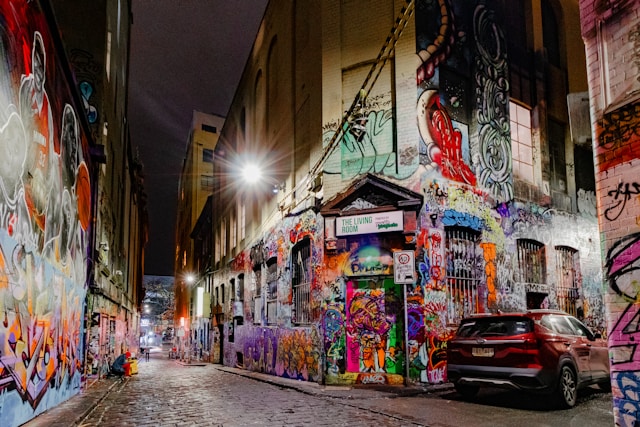
Few cities in the world have embraced street art quite like Melbourne. What was once dismissed as graffiti has evolved into a defining element of the city’s cultural identity — layered, political, expressive and unmistakably local. From its iconic laneways to towering mural-covered buildings, Melbourne’s urban canvas tells stories of creativity, rebellion and reinvention.
For visitors looking to explore Melbourne’s best street art, the experience is more than a sightseeing activity. It’s a journey through the city’s social history, artistic innovation and ever-changing visual landscape. And it’s precisely this dynamic, living quality that has positioned Melbourne as one of the world’s great street art capitals.
Table of Contents
A Culture Built on Laneways
Melbourne’s urban design plays a crucial role in its street art prominence. The city’s network of narrow laneways — originally service corridors — has become a thriving outdoor gallery. These tight brick-lined passages provide both intimacy and scale, allowing artists to experiment freely while drawing curious onlookers deeper into the city’s core.
Laneways like Hosier Lane, AC/DC Lane and Union Lane are internationally recognised.Their walls are in constant flux — artworks layered upon one another, old pieces partially visible beneath fresh paint. This impermanence is part of the appeal. Unlike traditional galleries, Melbourne’s street art is not static. It evolves daily.
The city’s tolerance — and at times active support — of street art has fostered an environment where artists can experiment without being immediately erased. This has attracted both local creatives and internationally renowned muralists, further strengthening Melbourne’s reputation on the global stage.
A Platform for Political and Social Commentary
One of the defining characteristics of Melbourne’s street art scene is its engagement with social and political themes. Murals often address Indigenous recognition, climate change, gender equality, refugee rights and global conflicts. These aren’t decorative afterthoughts; they are bold statements.
This willingness to tackle complex issues reflects Melbourne’s broader cultural identity — progressive, diverse and intellectually engaged. Street art here functions as public dialogue. It invites reaction, reflection and conversation.
Unlike many cities where graffiti is removed swiftly, Melbourne acknowledges its role as a voice of the community. The result is art that feels authentic and urgent rather than commercialised or sanitised.
International Recognition and Artistic Credibility
Melbourne’s standing as a global street art destination hasn’t happened by accident. The city consistently features in international travel guides and cultural rankings as one of the world’s premier urban art hubs. Artists from Europe, North America and Asia travel specifically to leave their mark on Melbourne’s walls.
Importantly, the city has managed to maintain a balance between grassroots authenticity and curated excellence. Large-scale commissioned murals sit alongside spontaneous stencil art. High-profile installations coexist with underground experimentation.
The influence of globally respected street artists such as Banksy — whose works have appeared in Melbourne — further cemented the city’s legitimacy in the early 2000s. While not all original pieces remain, their presence helped place Melbourne firmly on the international street art map.
Festivals and Institutional Support
Another reason Melbourne stands out is the institutional recognition of street art as a legitimate art form. Festivals, guided tours and cultural programs celebrate urban creativity rather than suppress it. Events like the Melbourne International Arts Festival have historically incorporated street-based and public art elements, reinforcing the city’s reputation as an arts capital.
Local councils have also introduced designated legal walls and mural programs. These initiatives allow artists to work openly while preserving the raw energy that defines the scene. By legitimising street art without over-regulating it, Melbourne has cultivated both quality and authenticity.
Constant Reinvention
Perhaps Melbourne’s greatest strength is that its street art never stands still. Returning visitors often find their favourite pieces replaced by something entirely new. This cycle of creation and renewal ensures that the city feels alive. The layered aesthetic — peeling posters, stencilled slogans, intricate paste-ups and large-scale portraits — gives Melbourne a texture that can’t be replicated. It’s not polished. It’s not predictable. And that’s precisely why it resonates.
A Tourist Attraction That Feels Authentic
Many cities now attempt to manufacture street art precincts to attract visitors. Melbourne’s scene, by contrast, developed organically. While tours and curated experiences exist, the core of the movement remains artist-driven. Visitors can wander independently, discovering hidden gems tucked between cafés and boutiques. The experience feels personal and exploratory rather than staged. In an era where authenticity is increasingly rare, Melbourne’s street art scene delivers something real.
The Intersection of Coffee, Culture and Creativity
It would be impossible to separate Melbourne’s street art from its broader cultural ecosystem. The same laneways that house murals also contain independent coffee roasters, boutique fashion labels and live music venues. Creativity spills from walls into businesses and back again. This synergy between hospitality, design and visual art creates a uniquely Melbourne atmosphere — one where culture is not confined to galleries but embedded in everyday life.
A Living Gallery Without Walls
Ultimately, Melbourne is considered one of the world’s great street art cities because it has allowed the medium to flourish naturally. It embraces contradiction: sanctioned yet rebellious, polished yet raw, local yet globally recognised. The city’s laneways function as a living gallery — open 24 hours a day, free to access, and constantly evolving. It is art shaped by its community, reflecting its values and tensions.
In Melbourne, street art is not a trend. It is an identity. And as long as artists continue to find a voice on its walls, the city’s reputation as a global street art capital will only grow stronger.
Want to know more? Head over to our blog!
Hello,
I am Pritam Chakrabortty. I’m a professional blogger and author. My passion is travelling and explore new unseen places. My travelling passion makes me create this blog to share my travel experiences.